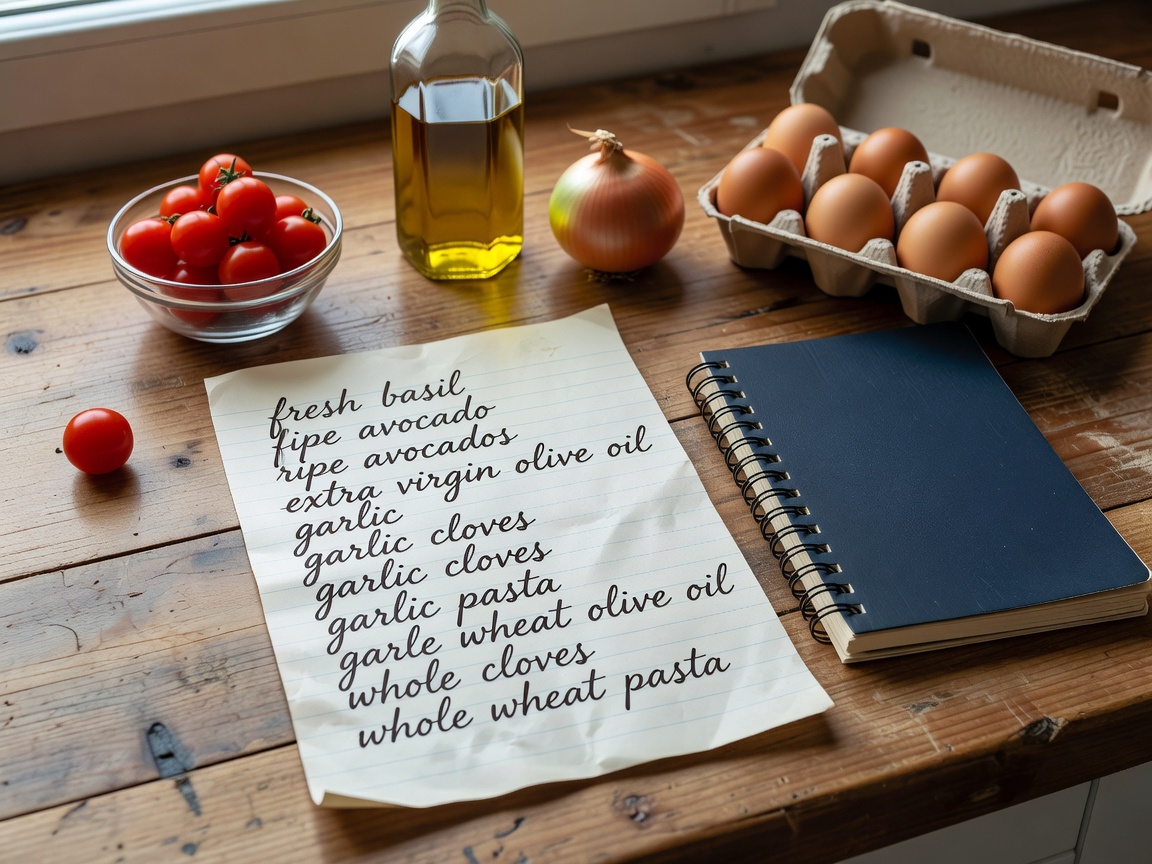
Gather the ingredients before organizing them
Write down the ingredients needed for your chosen meals, breakfasts, lunches and snacks. Start with a rough collection rather than trying to sort every item as you go. Include ordinary items that do not appear in a recipe: milk for drinks, fruit for a lunchbox or bread for a quick meal. These are often the gaps that trigger an unplanned second trip.
Check the cupboard, fridge and freezer against the collection. Be specific about what is usable, not simply what exists. A nearly empty packet may not cover the planned meal, while a frozen portion might replace an ingredient completely. Keep packaging directions and dietary requirements in mind; a substitute is only useful if it is appropriate for the person eating it.
Combine repeats and write meaningful quantities
If several meals use the same ingredient, put it on the shopping list once with the total amount needed. Then subtract what is already available. For example, two meals may need onions, but the onions at home may cover one of them. The list should show the remaining gap rather than repeating the original recipe quantities.
Quantities do not have to be precise to the gram when the meal is flexible. “Enough carrots for soup and a side dish” may work for an experienced cook, while a newer cook may prefer a weight or count. Choose the level of detail that helps you buy an appropriate amount. Avoid a vague “vegetables” if it leaves you unsure what role the purchase should play.
Your shopping list is a set of decisions made before the aisle gets busy.
Separate essentials from flexible extras
Mark the items that make your planned meals possible. Then identify things that would be welcome but are not necessary this trip. If the running total is higher than expected, this distinction makes it easier to adjust without removing the ingredient that holds several meals together. Essentials are personal: a suitable allergy-safe staple may be nonnegotiable even if a cheaper product is nearby.
Write a substitution beside an item only when it will genuinely work. Frozen vegetables may suit a cooked dish, but not every fresh preparation. A different bean may work in a stew, while a baking recipe may be less flexible. If no safe or practical substitute is available, change the meal rather than forcing an unsuitable purchase.
Arrange the list around your actual shop
Group items into a few familiar sections: produce, chilled foods, dry goods, frozen foods and household supplies. Match the order to your usual route where practical. Keep a bag or cooler available when conditions require it, and avoid leaving chilled food unrefrigerated while doing unrelated errands. Organization should support both convenience and safe handling.
For online shopping, the same list helps prevent browsing from replacing the plan. Check the product size, final basket total, delivery charges and substitution settings. An apparently familiar product photo may represent a different quantity. Review the order before checkout, particularly if the shop has automatically suggested a replacement.
Reusable trip check
Before you leave or check out
Keep the list usable for everyone shopping
If more than one person buys groceries, agree where the current list lives. A paper note, a phone note or this page can all work, but several competing lists can cause duplicate purchases. Add a brief specification when it matters: an unsweetened product, an allergen requirement or a pack size that fits the cupboard. Do not rely on someone remembering the conversation.
After shopping, note unavailable items and changes that affect the meals. A checked box should mean the item is bought, not simply that someone saw it. Before making another trip, ask whether a meal can be adjusted with food already at home. That small pause can save effort even when it does not change the grocery total.
Draft your shopping plan
Write your meal anchors, then enter only the items you still need, one per line. Include your own quantities and categories. The tool preserves your wording; it does not calculate ingredients, estimate prices or check nutritional suitability. Your entries stay on this open page and disappear when it is refreshed or closed.
This week's shopping plan
Before using the list, give it one final look beside your grocery budget. A list supports your judgment; it does not replace checking the pack, the shelf label or the needs of your household.